A camera that moved, the Tris Home back at the feeder, Santa Teresa on the October Big Day map and the countdown to the Great Southern BioBlitz.
"How many are your works, Lord! In wisdom you made them all; the earth is full of your creatures."
Psalm 104, verse 24
Project Figures
10,000
observations in the project
Six months in, Vem pra Mata has passed ten thousand observations on iNaturalist. More than three thousand six hundred records came in since the September newsletter alone, driven by the camera traps now running around the clock and by the return of the feeder camera.
10,025Observations+3,669 since Sep 25
1,357Species+126
788Identifiers+74
12Observers+1
As of October 29, 2026.
How we count
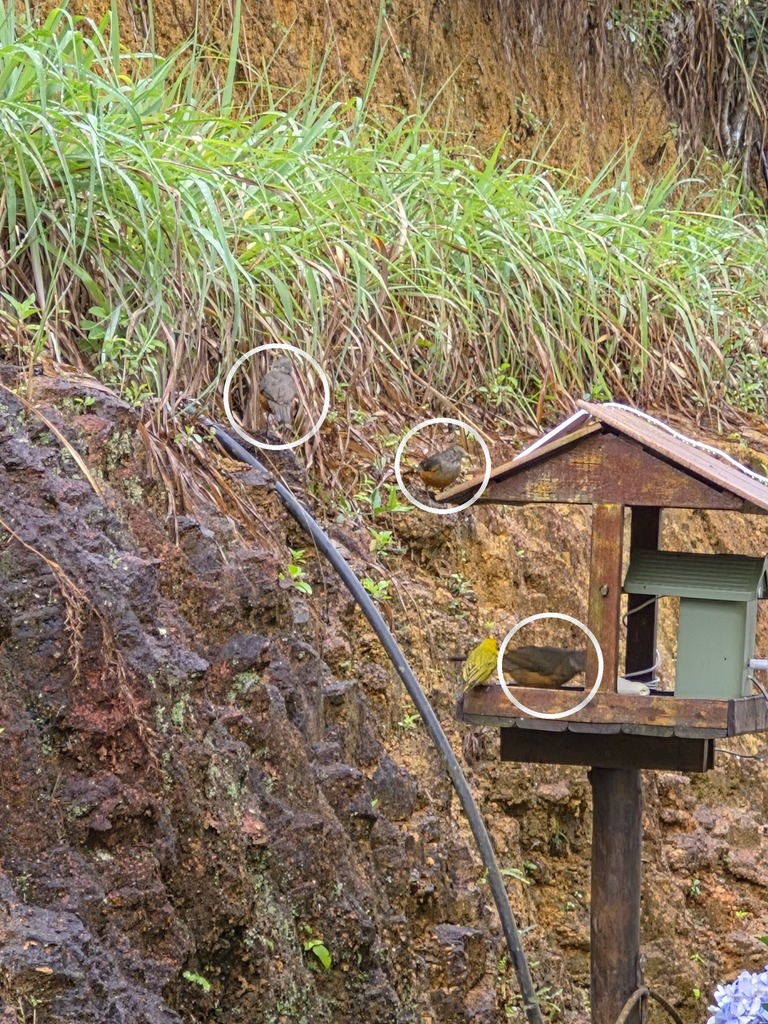
A common question: if the same thrush shows up ten times at the feeder, is that ten observations? For us, as a rule, yes. Each camera-trap record becomes one observation. That does not necessarily mean a different animal, but a different moment. Several individuals take turns at the feeders, and without a clear mark there is no way to say it is the same animal. Two shots help explain:
Three Rufous-bellied Thrushes at the Tris Home feeder at the same time, Oct 21. Photo: André Ferrari (CC BY)▶ Watch on YouTubeThree Palm Tanagers sharing the feeder.
There are exceptions: when the camera fires a burst of photos, they form a single observation; and when it is clearly the same individual, such as an opossum lingering in front of the lens, the records are grouped together.
News · Behind the Scenes
The camera that went looking for new characters
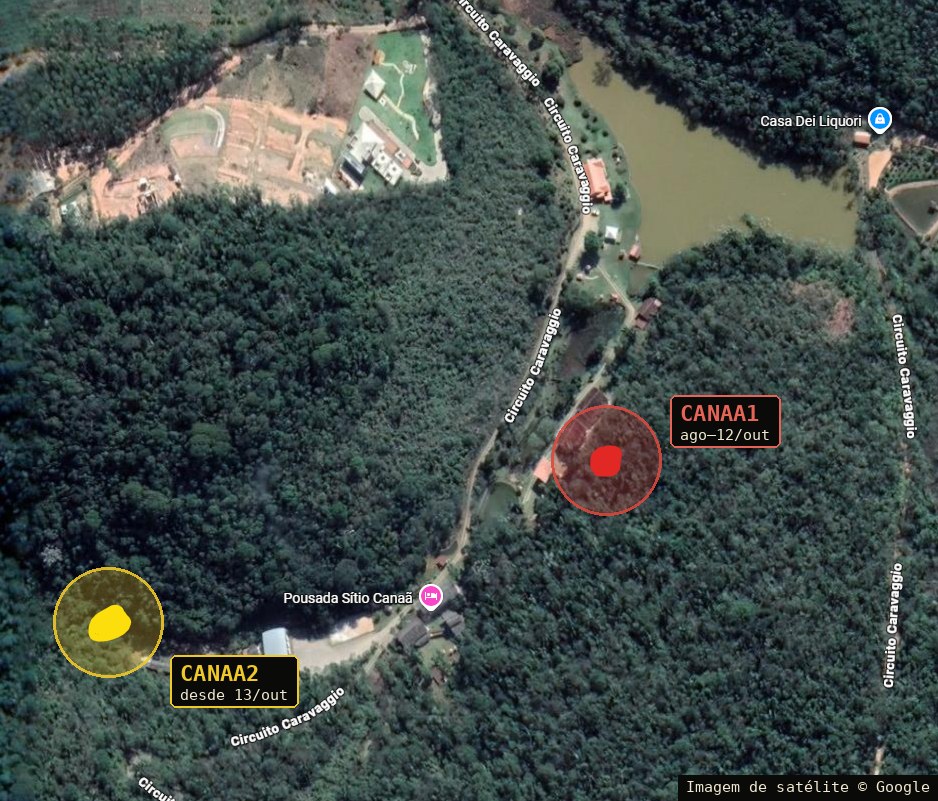
One of the GardePro cameras stood in the forest behind the house, at station CANAA1. Between August and October it produced 1,198 observations of 28 taxa, including the tayra caught on September 27. Over time, though, the cast became repetitive: White-tipped Dove, opossum, wood-rail and paca made up more than three quarters of the records.
On October 13 the camera moved to a new address: the forest edge west of the lodge, the new station CANAA2, with a simple goal: to find species not yet in the collection. Below, the last month of CANAA1 next to the first two weeks of CANAA2.
In just two weeks, the new station has already brought two species that CANAA1 never recorded: the White-necked Thrush and the Tataupa Tinamou (✦). Meanwhile, the White-tipped Dove, the record-holder at the old station, almost disappeared, and the coati became more frequent.
A fair caveat: the two stations cannot be compared number for number. The periods differ, and at CANAA2 the camera fires bursts of three photos that become a single observation. We will come back to this in future newsletters.
The Tris Home is back
On October 17 the feeder camera went back into operation, now in single-shot mode. In just over ten days it has produced 625 observations, led by the Rufous-bellied Thrush, the Saffron Finch and the Pale-breasted Thrush, plus visitors such as the Ruby-crowned Tanager, the Cinnamon Tanager, the Golden-chevroned Tanager and the Blue Dacnis.
Highlights of the Month
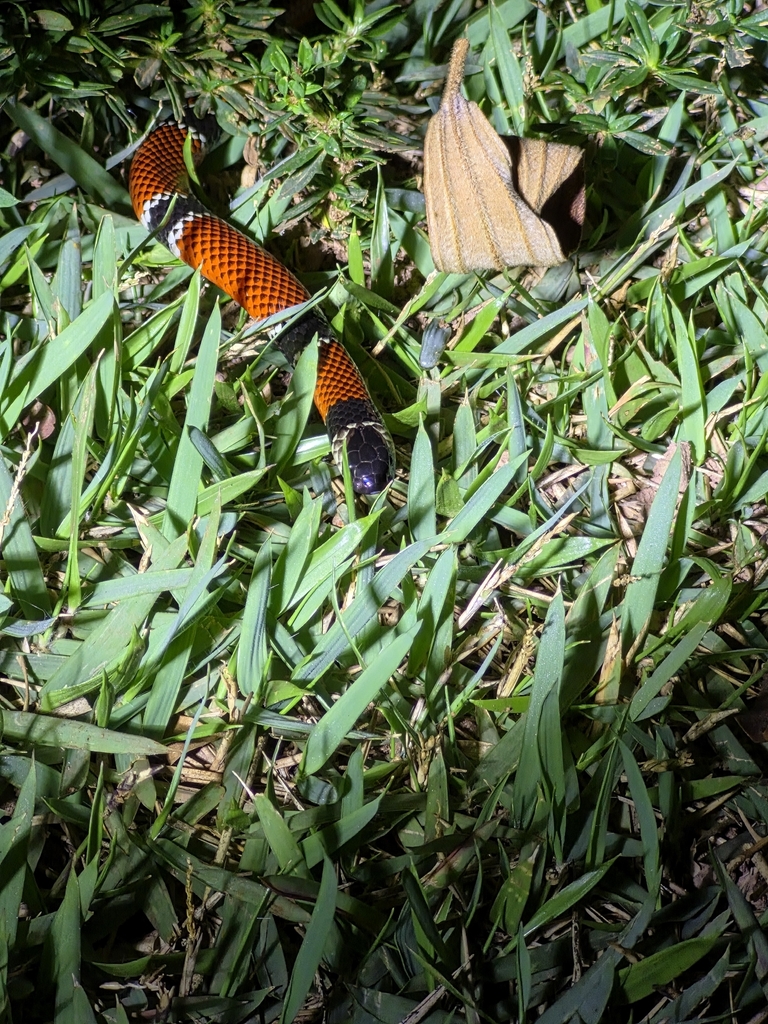
Featured Animal: the coral snake
Painted Coralsnake (Micrurus corallinus), Oct 11, 2026. Photo: André Ferrari (CC BY)
It was the night of October 11, and I went out to feed our dogs. On the way, a coral snake was gliding calmly across the grass. I was the one who got startled; it went on its way unhurried, and the encounter yielded a series of photos that has already reached Research Grade on iNaturalist.
Micrurus corallinus is a true coral snake with secretive habits, living on the Atlantic Forest floor among leaves and roots. It is venomous: the rule is always to admire it from a distance and never try to handle it.
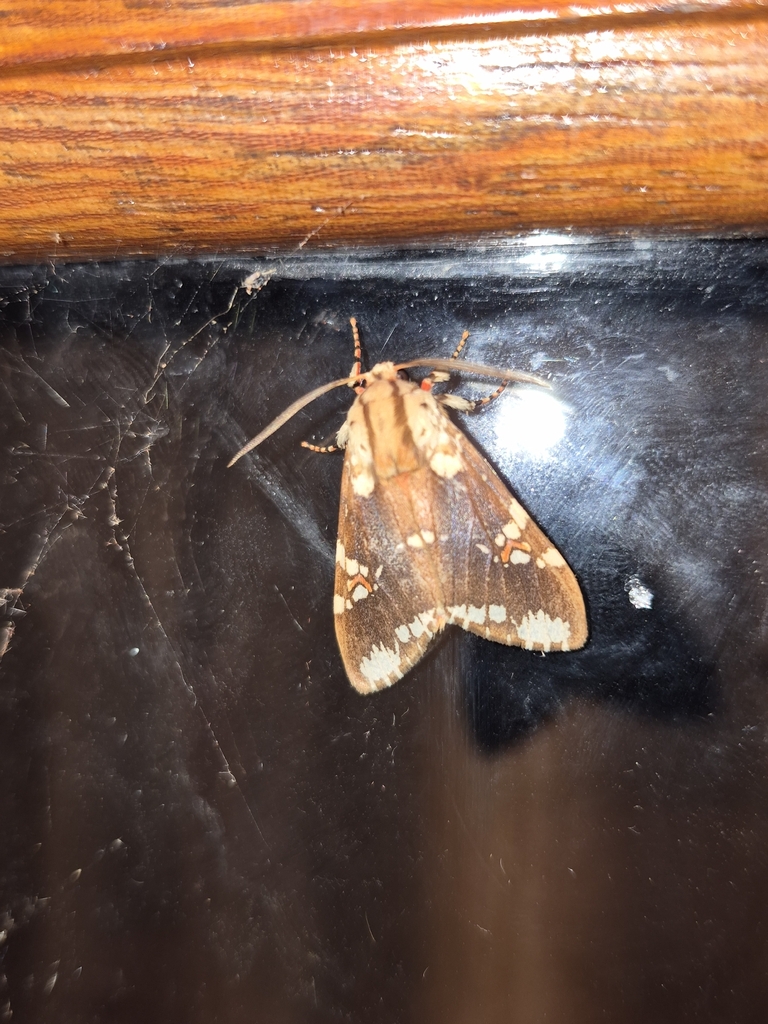
Pseudotessellarctia ursina, Sep 30, 2026. Photo: André Ferrari (CC BY)
A furry moth from the tiger moth subfamily (Arctiinae), recorded on the property on September 30. On the whole of iNaturalist there are only 4 records of this species. The identification was confirmed by two other identifiers, and the observation is already Research Grade.
And it did not come alone: in October the project also recorded Cresera espiritosantensis, whose name honors the state of Espírito Santo (5 records worldwide), and Heliactinidia nigrilinea (10 records).
On the October Big Day, the eBird/Cornell Lab citizen-science marathon, birders around the world record every bird they see or hear in a single day. Santa Teresa led the state of Espírito Santo and placed two birding hotspots among the fifteen with the most species in Brazil.
9th
Augusto Ruschi Biological Reserve 182 species
15th
Pousada Sítio Canaã (tied) 158 species
At the lodge, the checklists were made by guides Renan Betzel (@renan_betzel) and Athos Souza (@athossouza), who walked the property's trails throughout the day. The result was also covered by the local press in Santa Teresa.
In October the project gained a new observer: @vitorcdg, Vitor Corrêa Dias, who was already one of our most active identifiers and now arrives as the project's fourth-largest observer, with 340 observations and 126 species.
Vitor coordinates Greater Vitória's participation in the Great Southern BioBlitz, and partnering with him was decisive in bringing Santa Teresa into the event.
Countdown: Great Southern BioBlitz
27–30November
For the first time, Santa Teresa officially takes part in the Great Southern BioBlitz, the largest bioblitz in the Southern Hemisphere. Over four days, anyone can photograph plants, animals and fungi and post them on iNaturalist; observations made in the municipality are automatically included in the Santa Teresa project.
Those in Greater Vitória can join through the project coordinated by Vitor (@bioblitzes). The event organizers announced the municipality's debut on the GSB journal.
Acknowledgements
Our top ten identifiers
Behind every confirmed observation there is someone who took the time to look, compare and identify. This month we extend our thanks to the project's ten top identifiers. A special mention to @enricotosto96, who passed the three-thousand-identification mark.
 ▶ Watch on YouTube